Long before Christmas became a season of decorated trees, family gatherings and a jolly visitor arriving with presents, the holiday looked very different in the United States.
One of the people who helped change that was Washington Irving.
Irving is perhaps best remembered for “The Legend of Sleepy Hollow,” the eerie tale that has made him a fixture of Halloween reading. But the New York writer also had a lasting influence on another holiday — Christmas.
His stories, essays and enthusiasm for old traditions helped popularize an image of the holiday centered on family gatherings, generosity and good cheer.
Biographer Andrew Burstein put it this way: Irving helped turn smaller customs into larger traditions and made them symbols of family and social togetherness.
His influence began, in part, with Saint Nicholas.
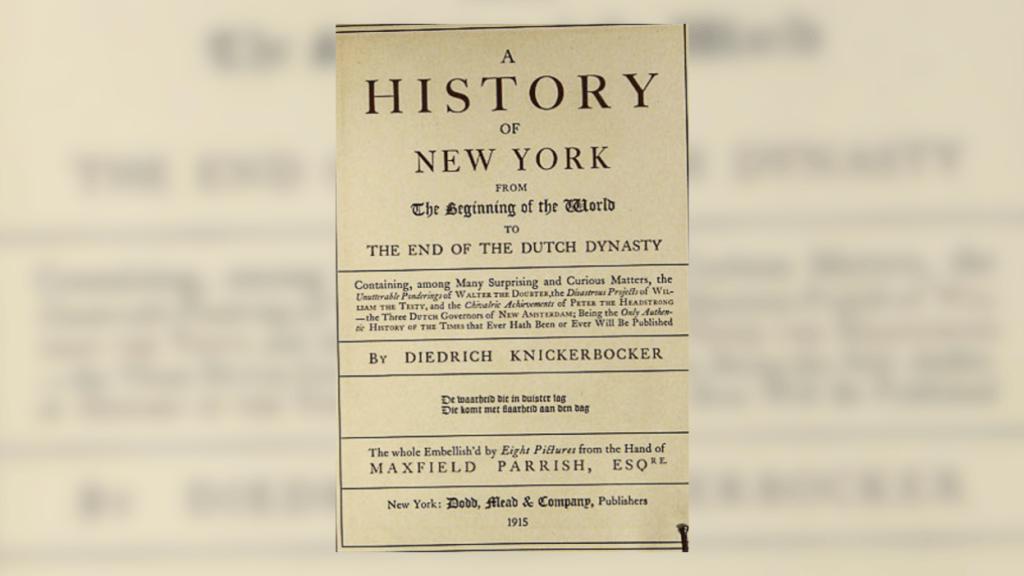
In his 1809 satirical book “A History of New York,” Irving included a fanciful story in which St. Nicholas appears to Dutch settlers in a vision, riding above the trees in a wagon used to deliver presents to children.
It was an early literary step toward transforming St. Nicholas into the figure Americans would eventually recognize as Santa Claus.
Irving’s affection for St. Nicholas lasted well beyond that book. In 1835, he helped establish the Saint Nicholas Society of the City of New York and served as its secretary for several years.
But Santa was only part of Irving’s Christmas influence.
After traveling to England in 1815, Irving became fascinated with old English Christmas traditions. When “The Sketch Book of Geoffrey Crayon, Gent.” reached American readers beginning in 1819, it included four essays about Christmas.
Those writings painted a warm and inviting picture: festive meals, dancing, singing, decorations, roaring fires and people gathering together.
It was a vision of Christmas built around atmosphere as much as observance.
Christmas had not always been widely celebrated in the United States. In parts of early America, the holiday had even been discouraged or banned because celebrations could become rowdy and were associated with heavy drinking and disorder.
Irving offered something different.
Instead of a public spectacle, his Christmas was intimate. It was nostalgic. It was a holiday that brought people together around tables and fireplaces, surrounded by food, music and tradition.
And Americans responded.
Biographer Brian Jay Jones has argued that Irving’s four Christmas essays had a greater influence on American culture than many of the better-known pieces in “The Sketch Book.” Jones credits Irving with laying a foundation that Charles Dickens would later build upon with his own enormously influential Christmas stories.
Irving’s influence did not stop with his own writing.
His Christmas sketches helped popularize an image of the holiday built around family gatherings, food, music and seasonal traditions at a time when Christmas celebrations in the United States were still evolving.
Other writers, including Charles Dickens, would later build on similar themes in the 19th century.






 It's Christmas 365