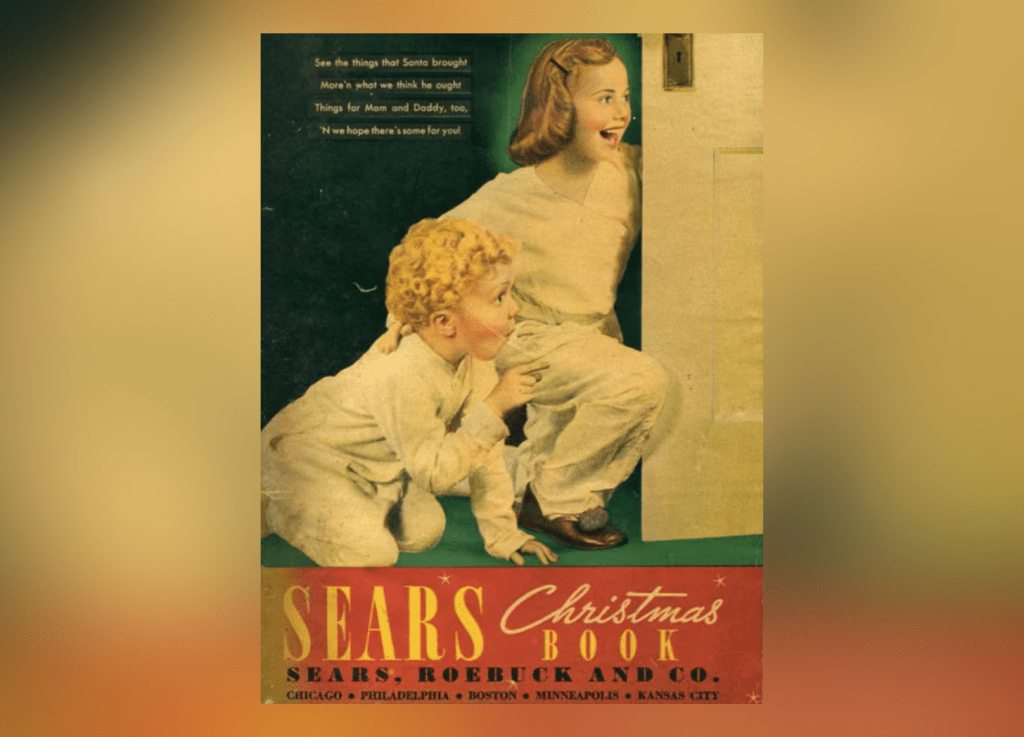
For much of the 20th century, the holiday season wasn’t truly complete without the arrival of the Sears Wish Book.
This iconic Christmas catalog became a staple in American homes from the 1930s through the 1990s, sparking excitement and joy in the hearts of children everywhere.
Filled with toys, games, gadgets and gifts, the Sears Wish Book became a beloved part of the Christmas tradition, eagerly anticipated by families year after year.
The Sears Wish Book made its debut in 1933, originally as a small part of the larger Sears Roebuck & Co. catalog.
With just over 100 pages, it offered holiday decorations, gifts and toys — the section that would come to define the catalog’s popularity.
Other catalogs existed, but none captured the imagination quite like the Sears Wish Book.
For families living in rural America or small towns, where stores were limited, the catalog became an essential window into a magical world of holiday possibilities.
The catalog’s arrival in the mailbox marked the unofficial start of the Christmas season, setting the tone for a season of anticipation.
Children, in particular, were mesmerized by the Sears Wish Book.
In an era before online shopping, the pages were a rare and thrilling glimpse into the world of toys.
Kids would spend hours flipping through the catalog, circling their favorite items and making detailed wish lists.
The catalog became an integral part of holiday preparations, with children dreaming about the toys they would ask Santa for or hope to find under the tree.
Parents, knowing the importance of these holiday wishes, often used the catalog as a guide for their Christmas shopping, making the ritual of browsing through the Wish Book a shared family experience.
One of the most magical aspects of the Sears Wish Book was its wide range of offerings. Whether it was dolls, action figures, board games or model trains, the catalog catered to children of all ages and interests.
It wasn’t just about the toys, though; it was about the experience of discovering new and exciting things.
For many children, the catalog made the distant seem attainable — everything they could dream of appeared on those pages, creating the illusion that anything was possible come Christmas morning.
This added a layer of excitement and wonder to the holiday season, as kids imagined what might be waiting for them under the tree.
As the decades passed, the Sears Wish Book continued to evolve, reflecting changing trends in toys and entertainment.
The 1960s and 1970s saw toys inspired by popular TV shows and movies, while the 1980s were filled with iconic action figures like G.I. Joe and Barbie.
Despite its enduring popularity, the introduction of online shopping signaled an eventual shift in how people shopped for Christmas, and by 2011, Sears discontinued the Wish Book for good.





 It's Christmas 365