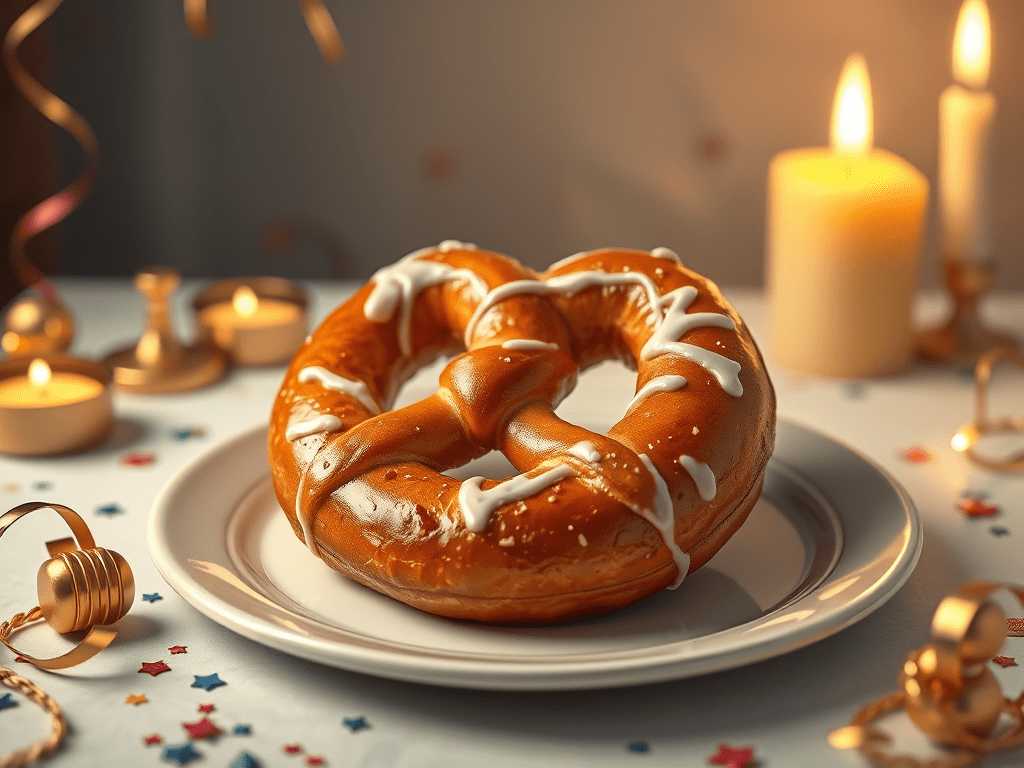
As the clock strikes midnight on New Year’s Eve, traditions around the world usher in hope and good fortune for the year ahead.
Among these cherished rituals is the practice of sharing a New Year’s pretzel—a uniquely shaped bread that symbolizes luck, prosperity and unity.
While this tradition has found a special home in the Pittsburgh region, its roots trace back to Germany, where pretzels have long been revered as symbols of blessings and well-being.
A German legacy
The origins of the New Year’s pretzel are steeped in German culture, where pretzels have been baked and enjoyed for centuries.
In Germany, the pretzel’s distinctive shape—often thought to resemble arms crossed in prayer—has made it a symbol of spiritual blessings and protection.
Pretzels were historically linked to religious observances and were even given to children as tokens of good luck.
In German-speaking regions, the tradition of eating pretzels at the start of the year developed as a way to bring good fortune and prosperity to households.
Bakers would create large, elaborate pretzels, sometimes sweetened with sugar or honey, to share with family and friends.
These pretzels were meant to symbolize unity and abundance for the year to come, and the custom became a beloved way to ring in the new year.
The tradition also held a communal aspect, with neighbors and extended families coming together to enjoy the baked goods and wish each other well.
Over time, the New Year’s pretzel became deeply embedded in the culinary and cultural fabric of Germany, with regional variations adding unique flavors and styles.
Some areas favored sweeter doughs, incorporating dried fruits or nuts, while others leaned toward savory recipes.
Regardless of the specific recipe, the core idea remained consistent: the pretzel was a symbol of hope and abundance for the coming year.
Pittsburgh’s unique twist
Pittsburgh, a city rich in German immigrant heritage, embraced the New Year’s pretzel as its own over time.
German immigrants who settled in western Pennsylvania in the 19th and early 20th centuries brought with them a wealth of culinary traditions, including this celebratory bread.
Over generations, the New Year’s pretzel has become a staple in Pittsburgh-area bakeries such as Prantl’s, Mancini’s and Oakmont.
The strong German influence on Pittsburgh’s culture can still be seen in its neighborhoods, churches and local cuisines.
It’s no surprise that the New Year’s pretzel—a symbol of luck and prosperity—resonated so deeply in this city.
Pittsburghers added their own flair to the tradition, with local bakeries crafting both sweet and savory versions to cater to the diverse tastes of the community.
Sweet New Year’s pretzels are often glazed or sprinkled with sugar, and some include raisins or other dried fruits.
Savory options might feature sesame seeds, poppy seeds or coarse salt. These pretzels are typically larger than their everyday counterparts, making them perfect for sharing at family gatherings or holiday parties.
In many households, the pretzel is served as part of a New Year’s Day breakfast.
The tradition isn’t just about the food; it’s also about the act of coming together to celebrate the start of a new year.
For many Pittsburgh families, the New Year’s pretzel is a centerpiece of their holiday celebrations, a tangible reminder of the blessings of the past year and the hope for the future. Some even believe that sharing a pretzel on New Year’s Day ensures good fortune for everyone at the table.
A symbol of hope and togetherness
The New Year’s pretzel has become more than just a culinary treat; it’s a symbol of hope and togetherness that resonates deeply in Pittsburgh and beyond.
For many families, the tradition of gathering around a freshly baked pretzel to start the year is a moment of connection and optimism.
Whether it’s purchased from a favorite bakery or homemade, the pretzel serves as a reminder that the year ahead is full of possibilities and blessings.
Whether enjoyed in Pennsylvania or elsewhere, the New Year’s pretzel continues to symbolize unity, luck and prosperity.
Its enduring popularity highlights the way traditions evolve and adapt while retaining their core meanings.
How to make or find a New Year’s pretzel
For those inspired to try this tradition, making a New Year’s pretzel at home can be a fun and rewarding experience.
Recipes are widely available online and range from simple to elaborate.
A basic sweet dough, shaped into a pretzel and baked to golden perfection, is a great place to start.
Adding a glaze or sprinkling of sugar can enhance the flavor and presentation.
If baking isn’t your style, Pittsburgh-area bakeries are the go-to source for authentic New Year’s pretzels.





 It's Christmas 365