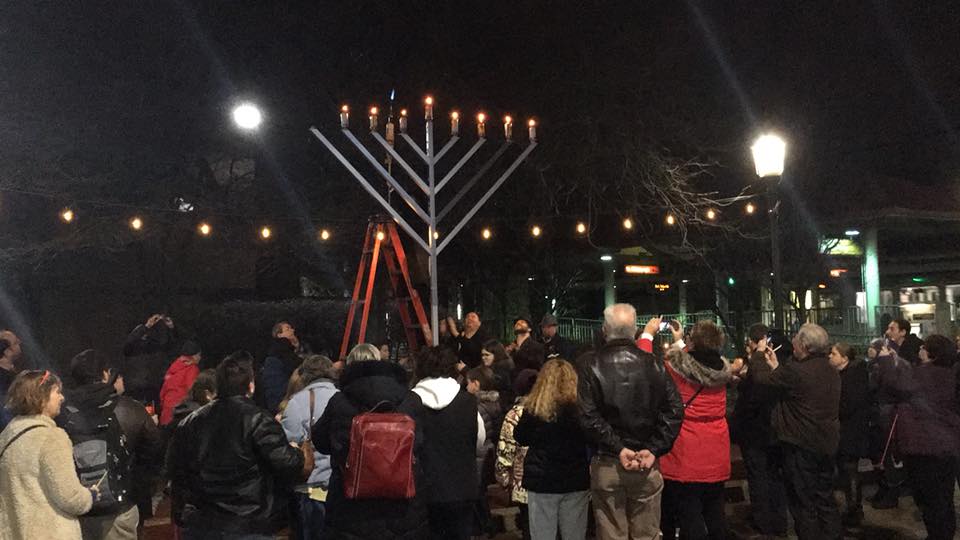
If you’ve glanced at your calendar this year, you may have noticed that Hanukkah doesn’t begin until the evening of Dec. 25, 2024, overlapping with Christmas for the first time in years. This overlap is bound to spark some questions—mainly, why is Hanukkah so late this year?
The answer lies in how the Jewish calendar works. Unlike the Gregorian calendar most of us use daily, the Jewish calendar is lunar-based, following the cycles of the moon rather than the sun. This creates some fascinating quirks when it comes to dates, including holidays “shifting” each year when viewed from the perspective of the Gregorian calendar.
Here’s a quick breakdown of what’s happening in 2024:
The Jewish calendar basics
The Jewish calendar consists of 12 months, each lasting 29 or 30 days, aligning with the phases of the moon. A standard Jewish year is 354 days long—about 11 days shorter than the solar year used by the Gregorian calendar.
If this difference weren’t corrected, Jewish holidays like Hanukkah would drift earlier and earlier into the year. To prevent this, the Jewish calendar includes a leap year system, where an extra month, called Adar II, is added about seven times in a 19-year cycle. 2024 happens to follow one of these leap years, meaning the Jewish calendar needed an extra boost to keep the holidays in their proper seasons.
The first day of Hanukkah is always on the 25th day of Kislev on the Hebrew calendar, but that day changes on the solar calendar each year.
What is Kislev?
Kislev is the ninth month of the Jewish calendar and usually falls during November or December in the Gregorian calendar. Its name and significance are deeply tied to Jewish history and tradition, with the 25th day of Kislev marking the start of Hanukkah each year. This date commemorates the rededication of the Second Temple in Jerusalem after its desecration and the miracle of the oil that burned for eight days.
Unlike fixed Gregorian dates, the 25th of Kislev shifts around because the Jewish calendar is lunar-based.
Why Dec. 25?
Leap years in the Jewish calendar shift everything forward slightly, pushing holidays later in the Gregorian calendar. As a result, Hanukkah, which normally falls anywhere from late November to mid-December, gets bumped into late December in 2024. In this rare alignment, the first night of Hanukkah lands squarely on Christmas Eve, and the first full day of Hanukkah is Christmas Day.





 It's Christmas 365