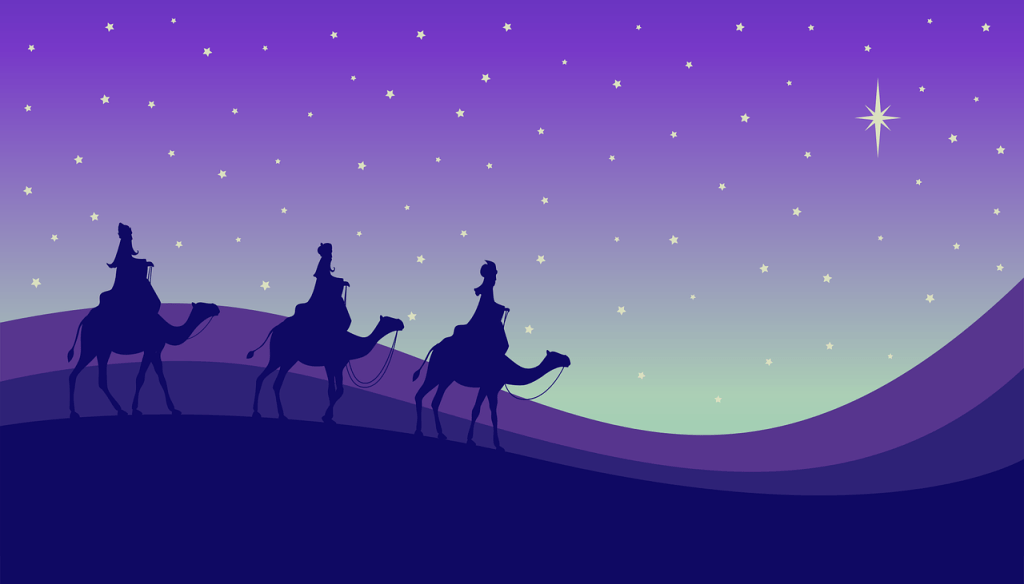
Three Kings’ Day, celebrated on Jan. 6, marks the culmination of the Christmas season with a rich tapestry of traditions, rooted in both Christian and cultural histories. Also known as Epiphany or the Feast of the Epiphany, this day holds special significance in various cultures around the world.
The roots of Three Kings’ Day can be traced to the Christian tradition, commemorating the visit of the Magi — Melchior, Caspar, and Balthazar — to the infant Jesus in Bethlehem. These wise men are believed to have followed the star of Bethlehem, presenting gifts of gold, frankincense, and myrrh. The journey of the Magi symbolizes the revelation of Jesus as the Son of God to the Gentiles.
Celebrations vary across cultures, but common elements include festive processions, feasts, and the reenactment of the Magi’s journey. In many Latin American countries, families participate in vibrant parades, often with individuals dressing up as the Three Kings and distributing sweets to children. In Spain and some Hispanic communities, the day is known for the grand Cabalgata de Reyes, or the Three Kings’ Parade, featuring elaborate floats and lively performances.
One central tradition involves the preparation and consumption of a special cake known as Rosca de Reyes (King’s Cake). This sweet bread is shaped in an oval, symbolizing a crown, and often contains hidden figurines representing the baby Jesus. The person who finds the figurine in their slice becomes the godparent of the figure and is responsible for hosting a gathering on Candlemas, another significant day in the Christian calendar.
Three Kings’ Day is a time of joy, reflection, and generosity. It marks the closing of the Christmas season and the beginning of a new year with a sense of renewed purpose. As families and communities come together to celebrate the journey of the Magi, Three Kings’ Day stands as a vibrant testament to the enduring magic and cultural diversity woven into the fabric of the holiday season.





 It's Christmas 365